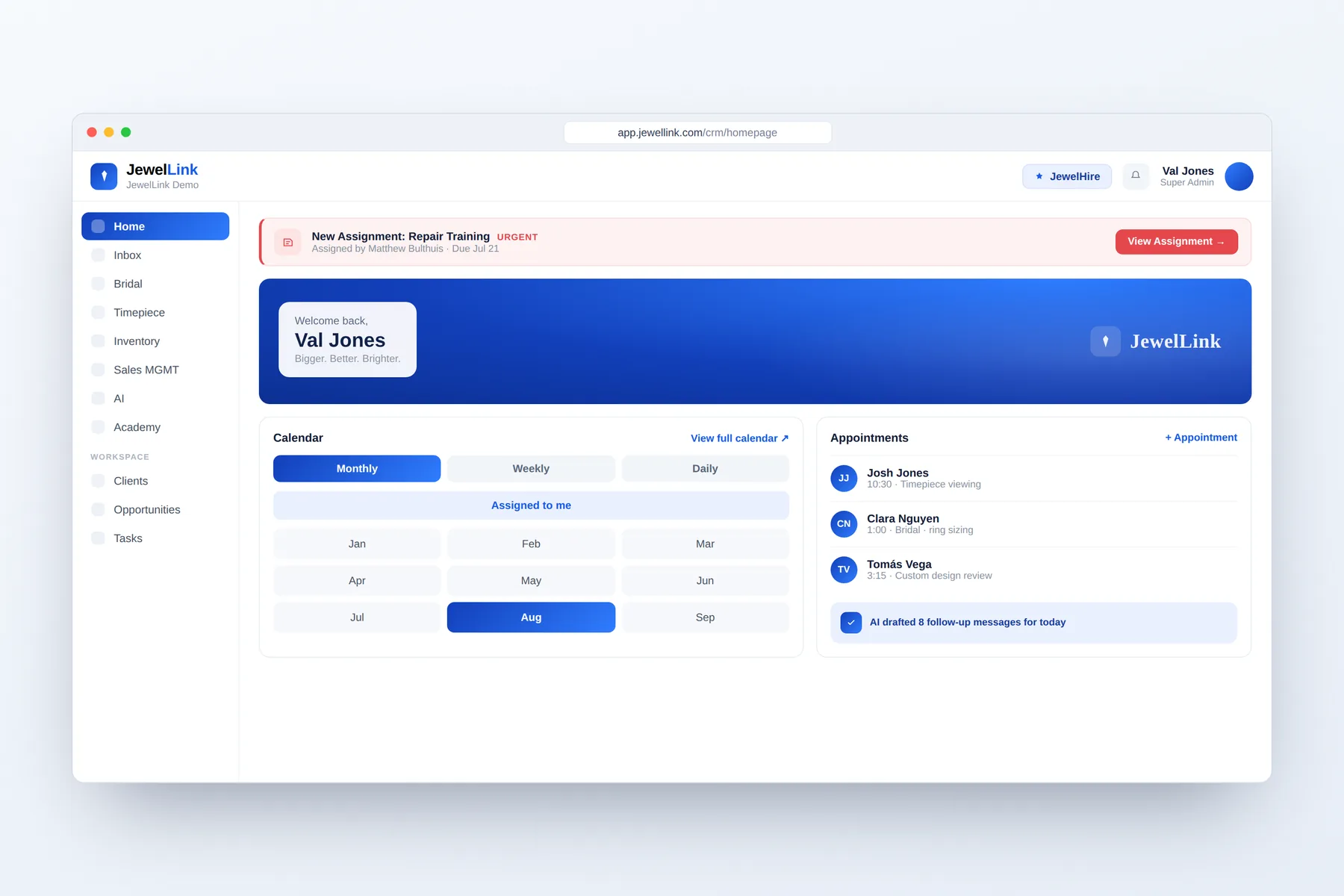
CRM + clientelingJewelLink
CRM / clienteling / training

The JewelLink System
JewelLink, CountRetail, and JewelHire each solve a distinct jewelry- retail need. Use one on its own or connect all three as the JewelLink System. Linkd remains a separate POS and ERP that can integrate when your store chooses it.
CRM / clienteling / training
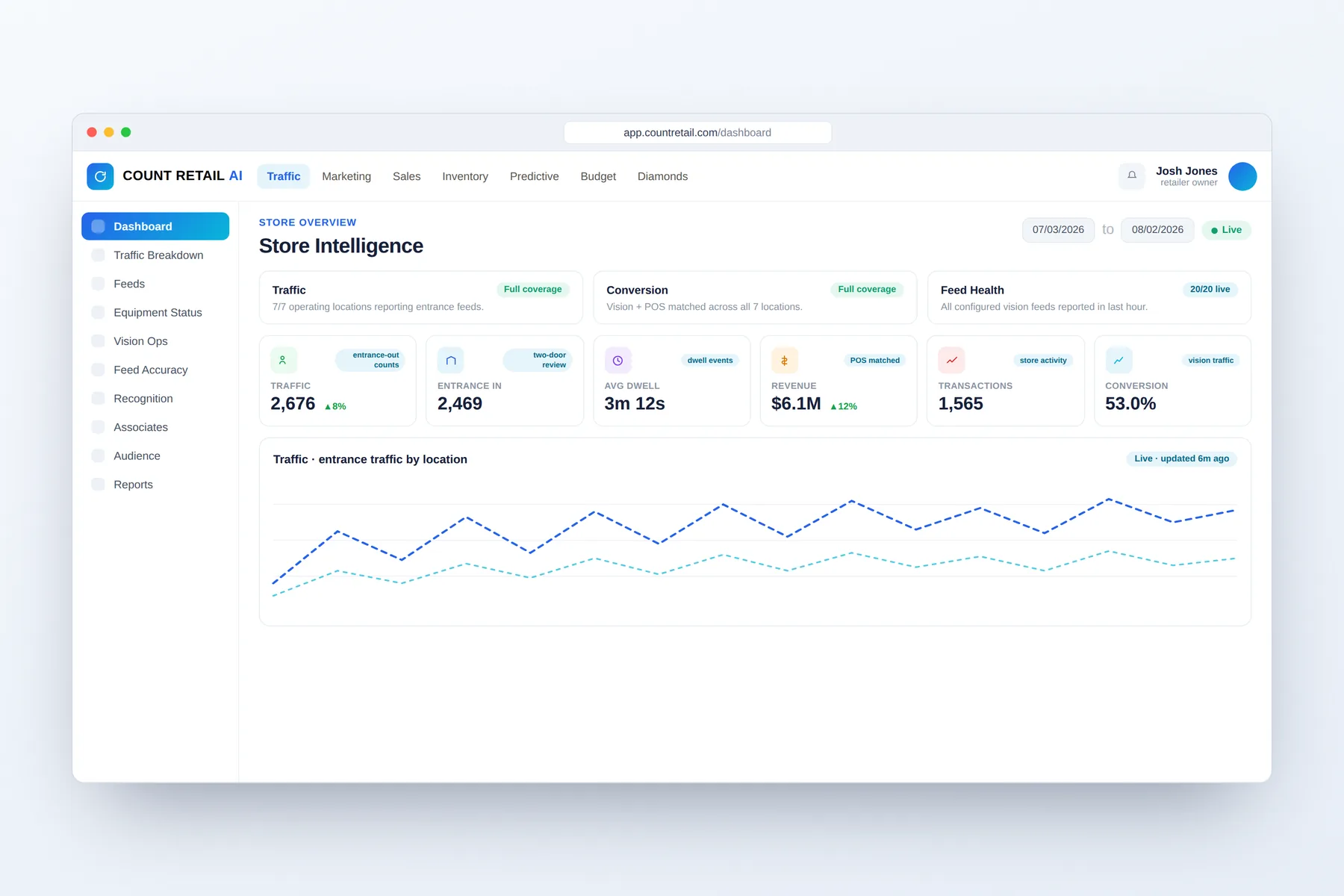
Traffic / Vision AI / analytics
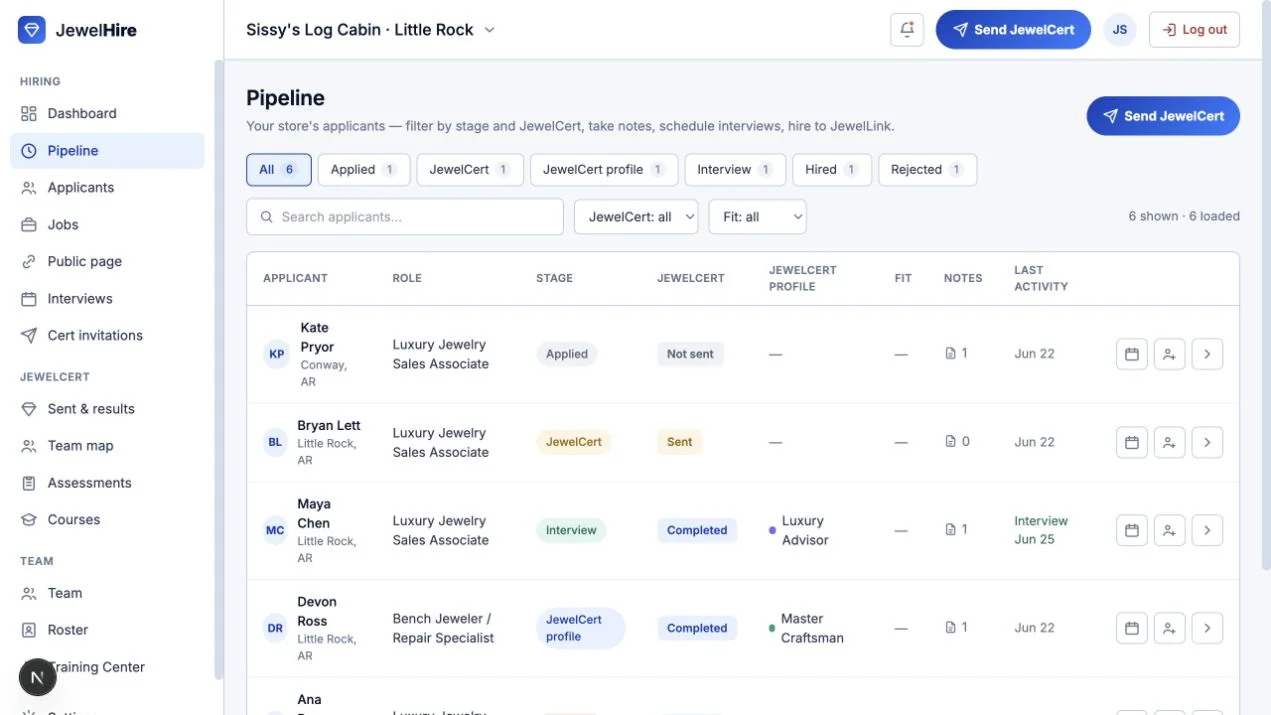
Hiring / assessment / onboarding

Customer profiles, clienteling, texting, bridal follow-up, training, and assisted selling.

Traffic, marketing attribution, inventory analytics, and owner reporting.
Recruiting, assessment, hiring, and onboarding for jewelry retail teams.
How the JewelLink System works
Customer history supports clienteling, texting, bridal follow-up, training, and the next conversation.
Traffic, camera, marketing, inventory, and sales information support store-performance analysis.
Jewelry-specific recruiting, assessment, hiring, and onboarding support each role in the store.
At a glance
Quick answers
The JewelLink System includes JewelLink for customer relationships, CountRetail for store analytics, and JewelHire for hiring and onboarding.
Linkd is a separate POS and ERP platform. It can work on its own and can connect with JewelLink System products when shared store information helps.
No. Start with JewelLink, CountRetail, or JewelHire based on the need in front of you, then add another when shared customer, store, or team information will help.
Book a demo
Tell us what your store needs. We will show the relevant products and explain which connections are available.